Sleepy Pal, A wellness app designed to help improve sleep

ROLE
Introduction
Sleepy Pal is a calm, pressure-free sleep application designed to help users build healthier bedtime routines.
For this bootcamp project, Mardhem and I created a research-driven wellness solution for the Daily Health Conference (fictional client). Our goal was to design a supportive experience that helps users wind down, fall asleep, and wake up feeling reassured rather than judged.
We used AI-generated soft visuals and a non-judgmental koala companion to symbolize rest and emotional progress, avoiding the stress of data-heavy sleep tracking.
Research
Secondary Research
We started with a review of academic literature on sleep apps.
Studies show they can slightly improve sleep and reduce insomnia symptoms, but the evidence is mixed (Nature, PubMed). They can increase awareness of sleep habits, yet many are not clinically validated and may create stress through excessive data (PMC, JCSM). User experiences also vary widely (Frontiers).
Key takeaway: too much data increases anxiety.
Survey Insights
We surveyed 37 participants. While many reported getting enough hours of sleep, overall sleep quality was only average, and many still felt tired. A strong need emerged for calmer, more supportive wind-down experiences.

Competitive Analysis
Before conducting user interviews, we analyzed existing sleep apps to understand the market and identify gaps.We analyzed 4 competitors across features, brand, and positioning. Better sleep, Sleepscore, Calm, Sleep cycle.
Most apps sit at two extremes — either data-heavy or data-free — leaving room for a calmer, balanced approach. Our positioning fills this gap with a sleep-first experience that offers reassurance and just enough insight, without pressure.

User Interviews
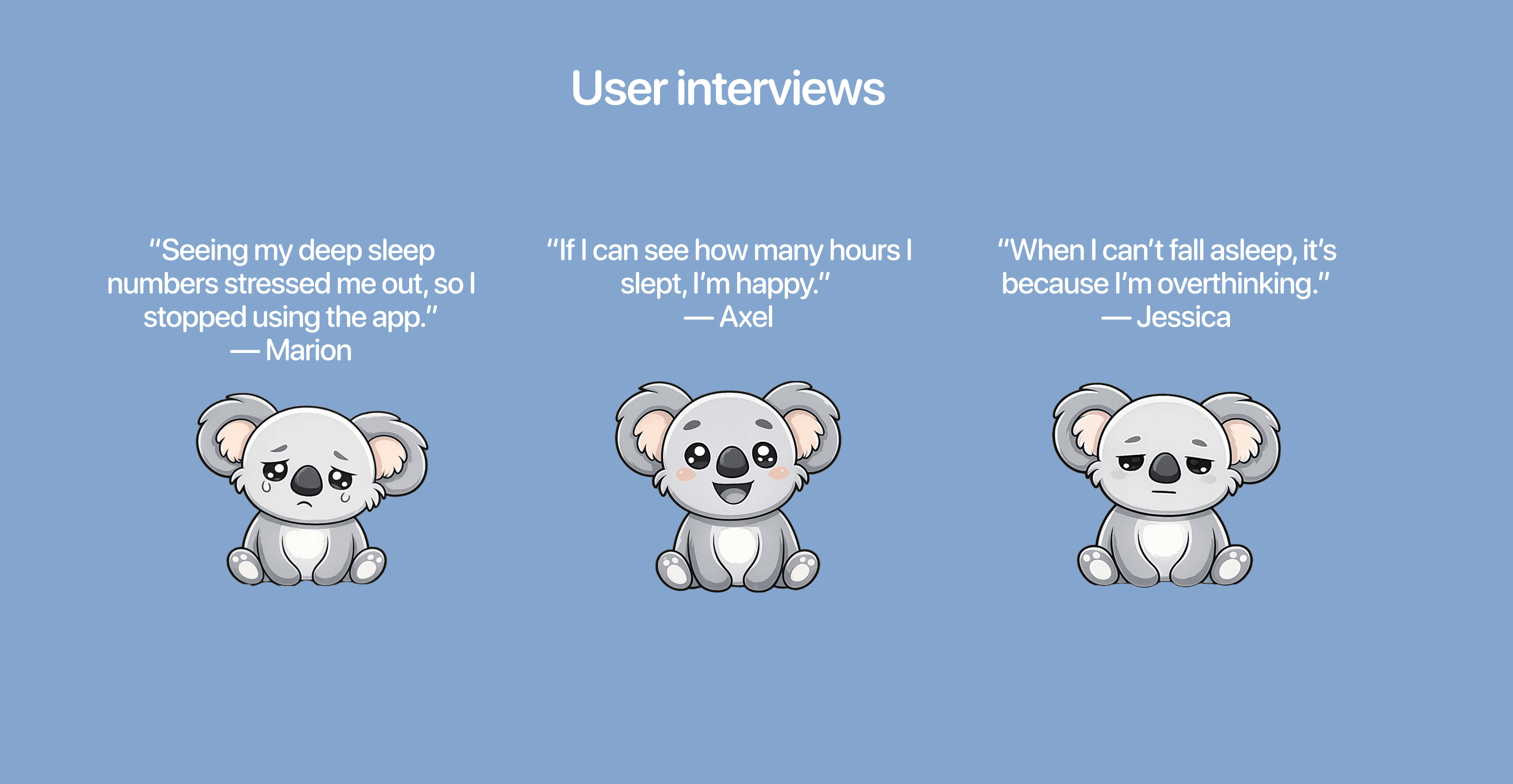
We conducted 5 user interviews. These revealed that too much sleep data causes stress. Users prefer simplicity and reassurance. One participant shared that seeing deep sleep numbers stressed them out so much they stopped using sleep apps altogether. Mental overthinking at bedtime was the biggest barrier to falling asleep.
Synthesizing Insights
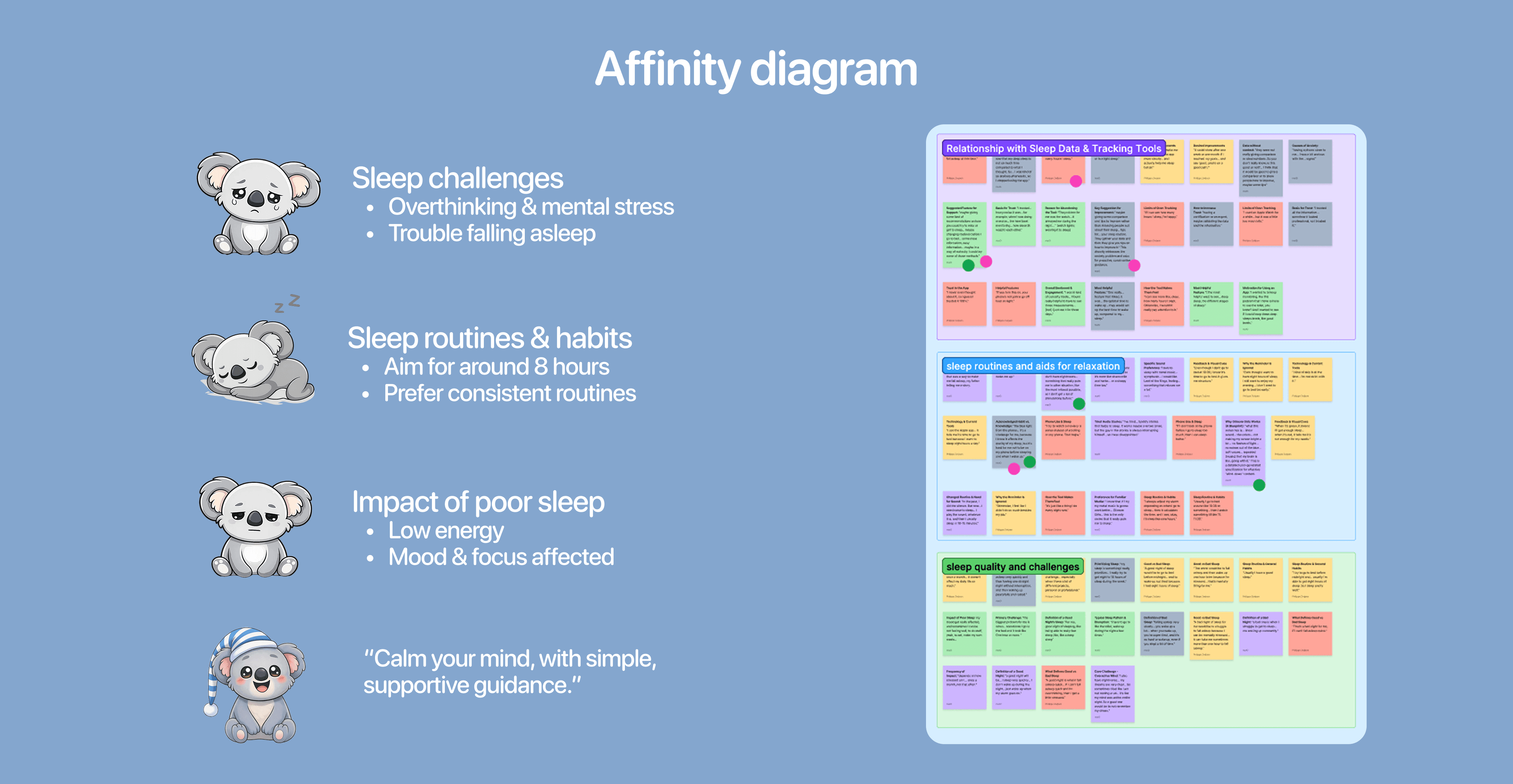
Affinity diagram
After our user interviews we clustered insights into:
Mental stress and overthinking
Need for routines
Emotional impact of poor sleep
Users want calm guidance, not data overload.
Understanding the User
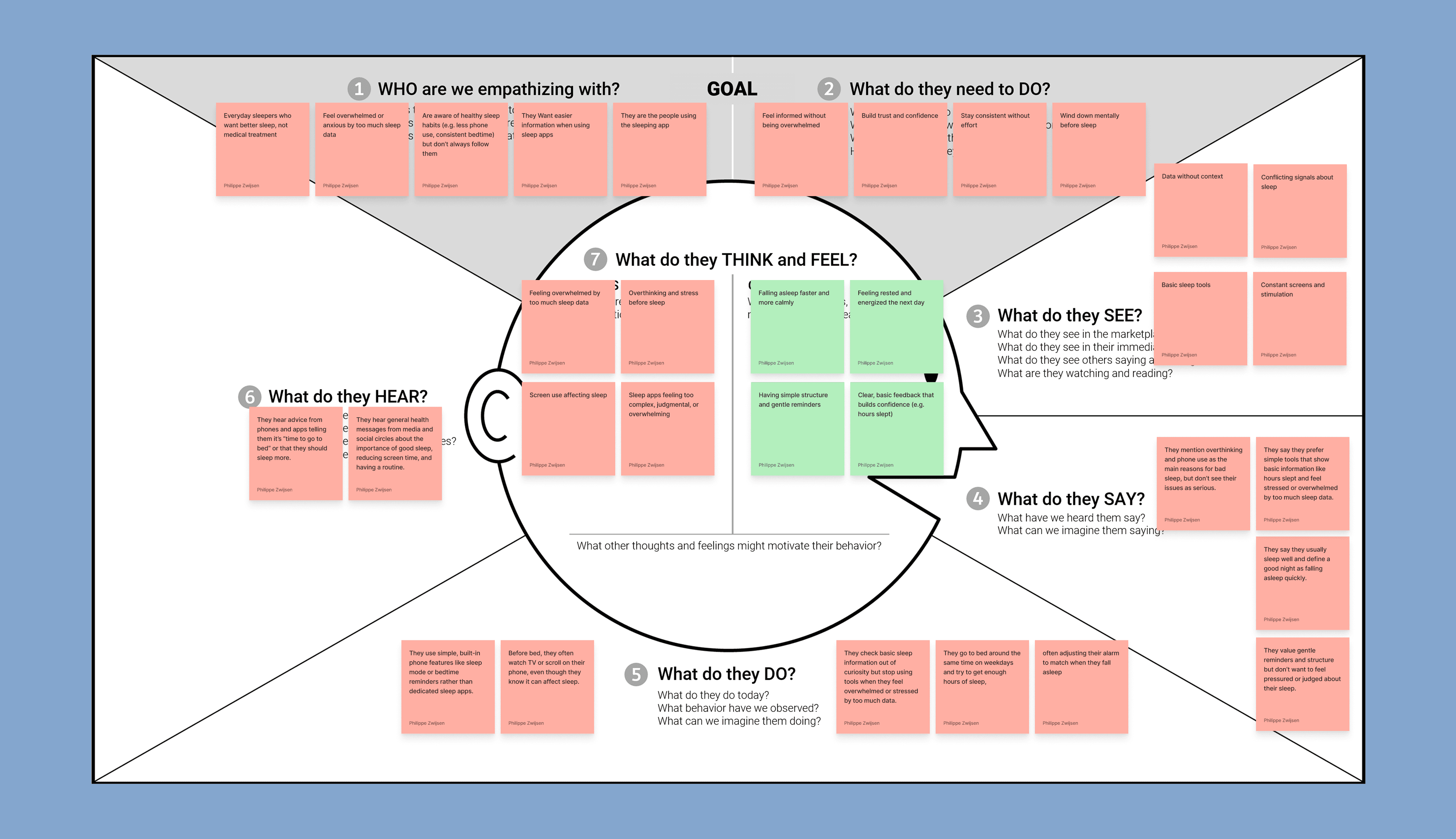
Empathy Map
Users feel pressured by data, rely on basic tools before bed, and often keep using their phones even when they want to sleep. What they need is calm reassurance, simple structure, and non-judgmental feedback.
User Persona
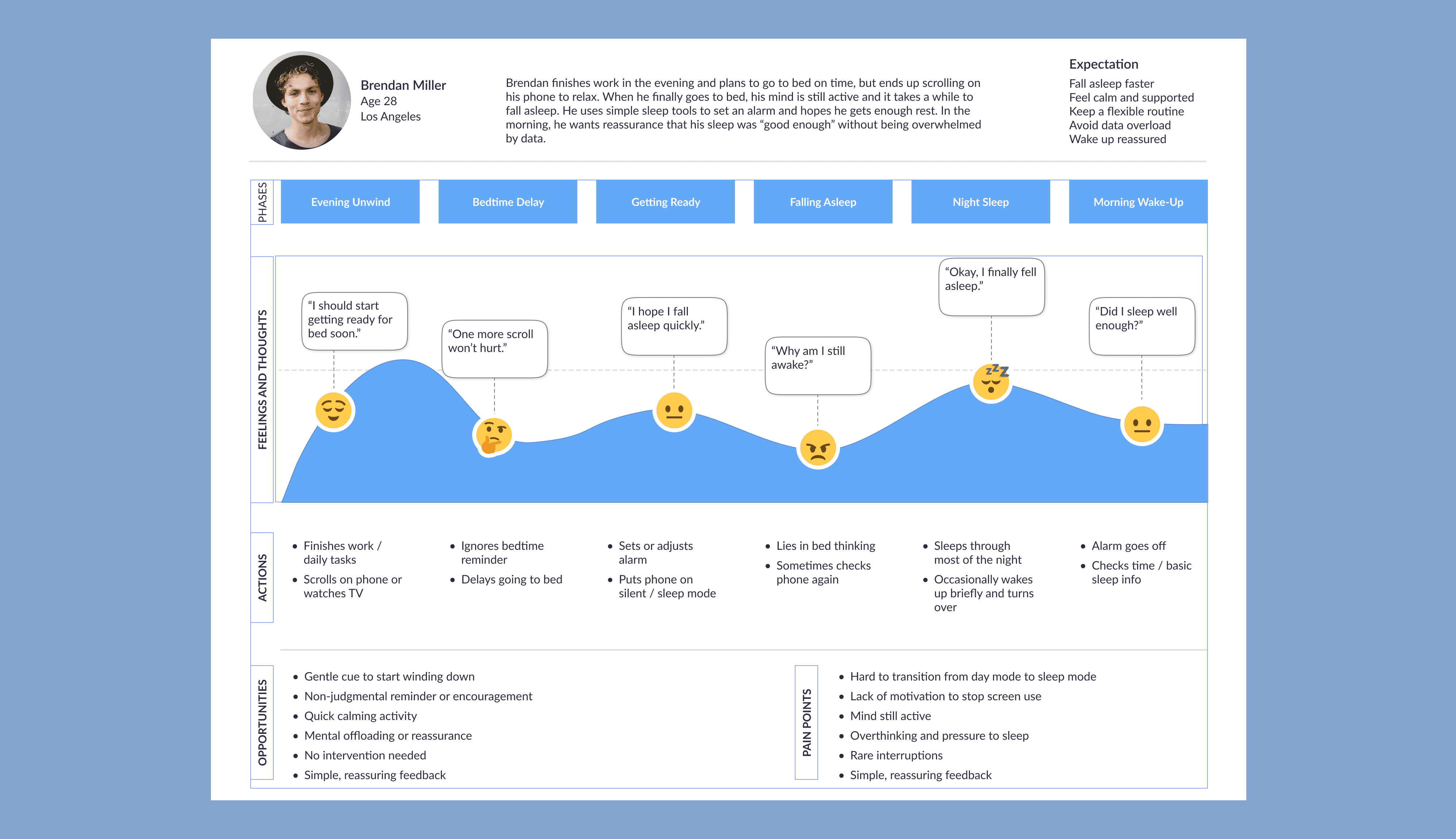
After our user interviews and our empathy map we created a user persona. Meet Brendan, a 28-year-old social media manager. He knows sleep is important but struggles with consistency and feels overwhelmed by complex sleep data.

Journey Map
Brendan’s stress peaks before bed due to scrolling and overthinking. In the morning, he doesn’t want charts or scores — he wants reassurance. This revealed opportunities for gentle wind-down cues and pressure-free mornings.
Problem Statement
Our Problem stetament is: Busy professionals need a calm, flexible way to fall asleep because existing sleep tools create pressure instead of reassurance.
Ideation
How Might We & Crazy 8s
We explored questions such as how we might help users fall asleep without pressure and how we might reassure users without relying on data. This ideation phase led Led to the koala companion and one-tap wind-down.

MoSCoW & MVP
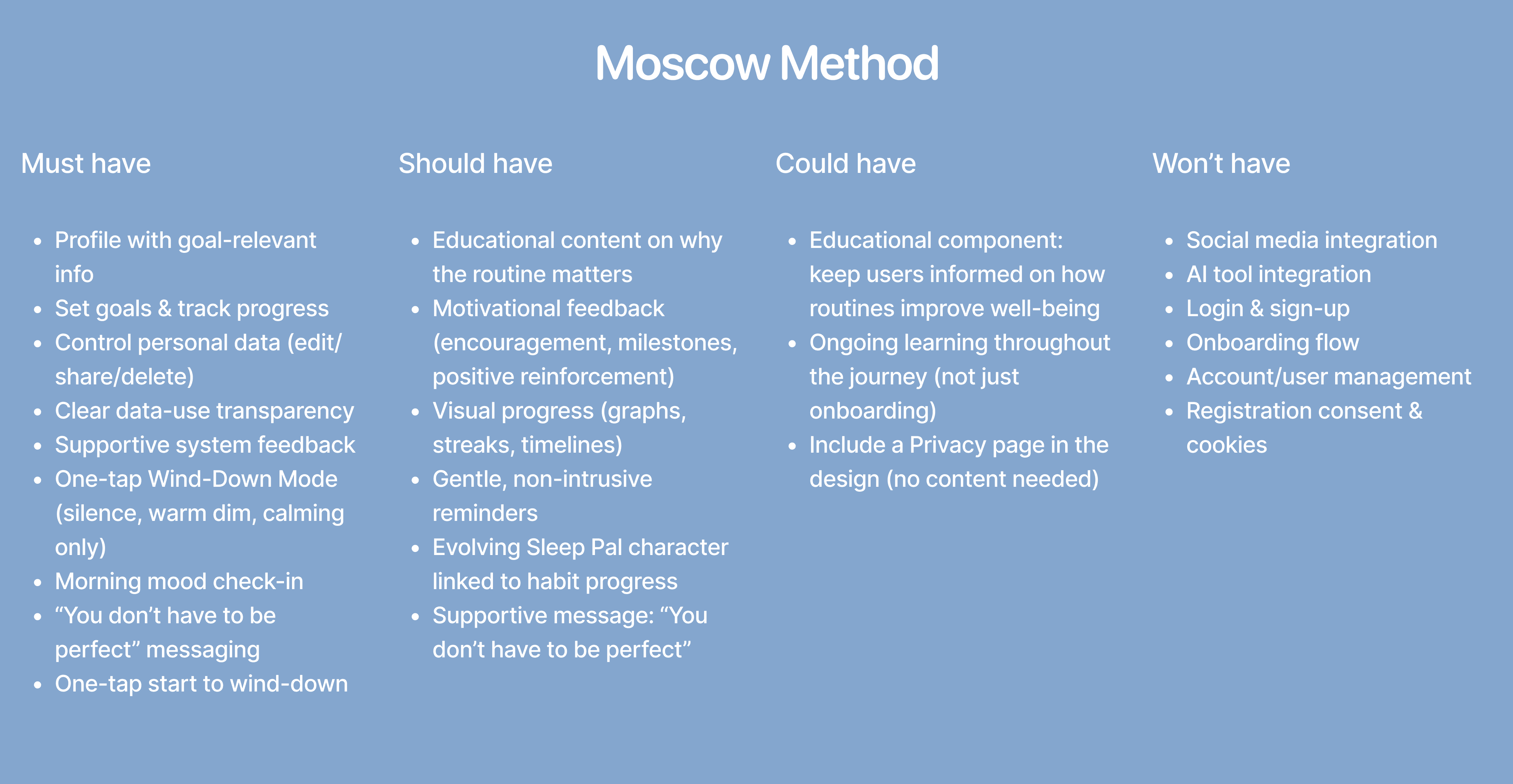
Using MoSCoW prioritization, we defined an MVP focused on calm and consistency. Core features include a one-tap wind-down, gentle morning check-ins, and a Sleep Pal that reflects progress emotionally. Complex data was intentionally left out.
Structure & Testing
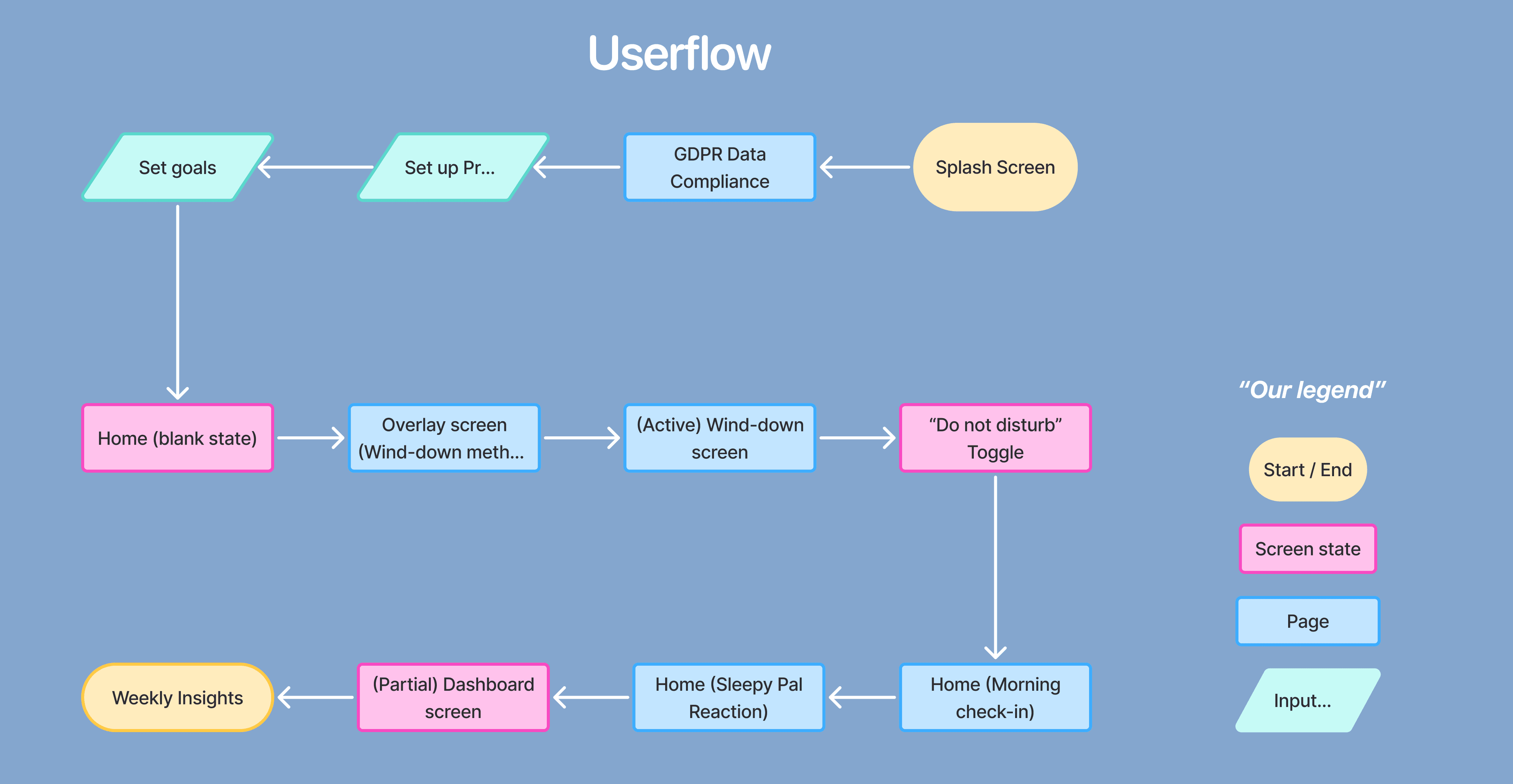
User Flow: Wind-Down → Sleep → Gentle Morning flow.
The user flow minimizes friction. After a lightweight setup, the experience centers around the home screen and Sleep Pal. Wind-down is one tap, mornings are gentle, and weekly insights are optional.
Low-Fidelity Testing
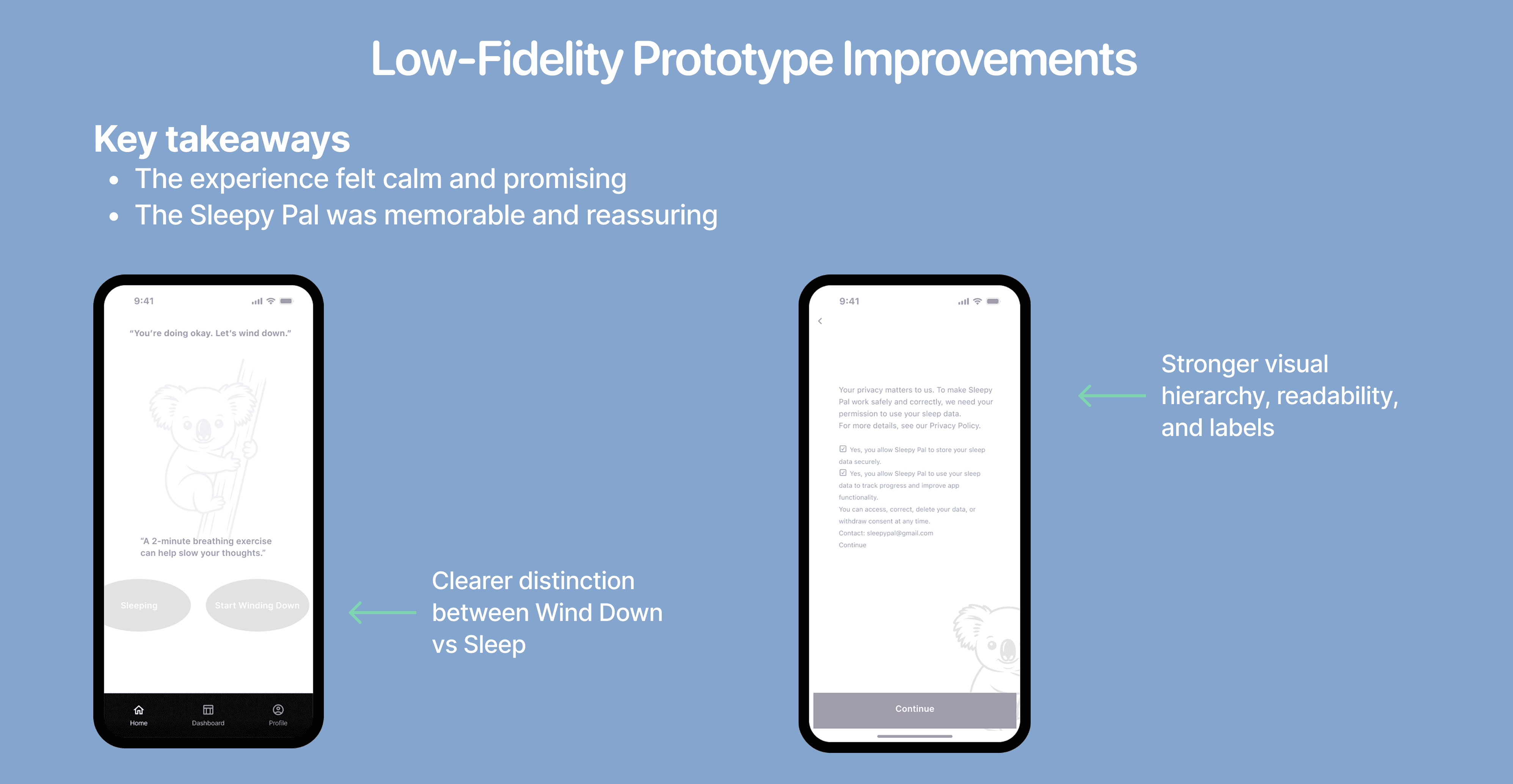
After completing the user flow, we conducted low-fidelity testing with five users.
The testing showed that the app felt calm and friendly, but users needed a clearer hierarchy, better labeling, and a stronger distinction between winding down and sleeping.
Mid-Fidelity Testing
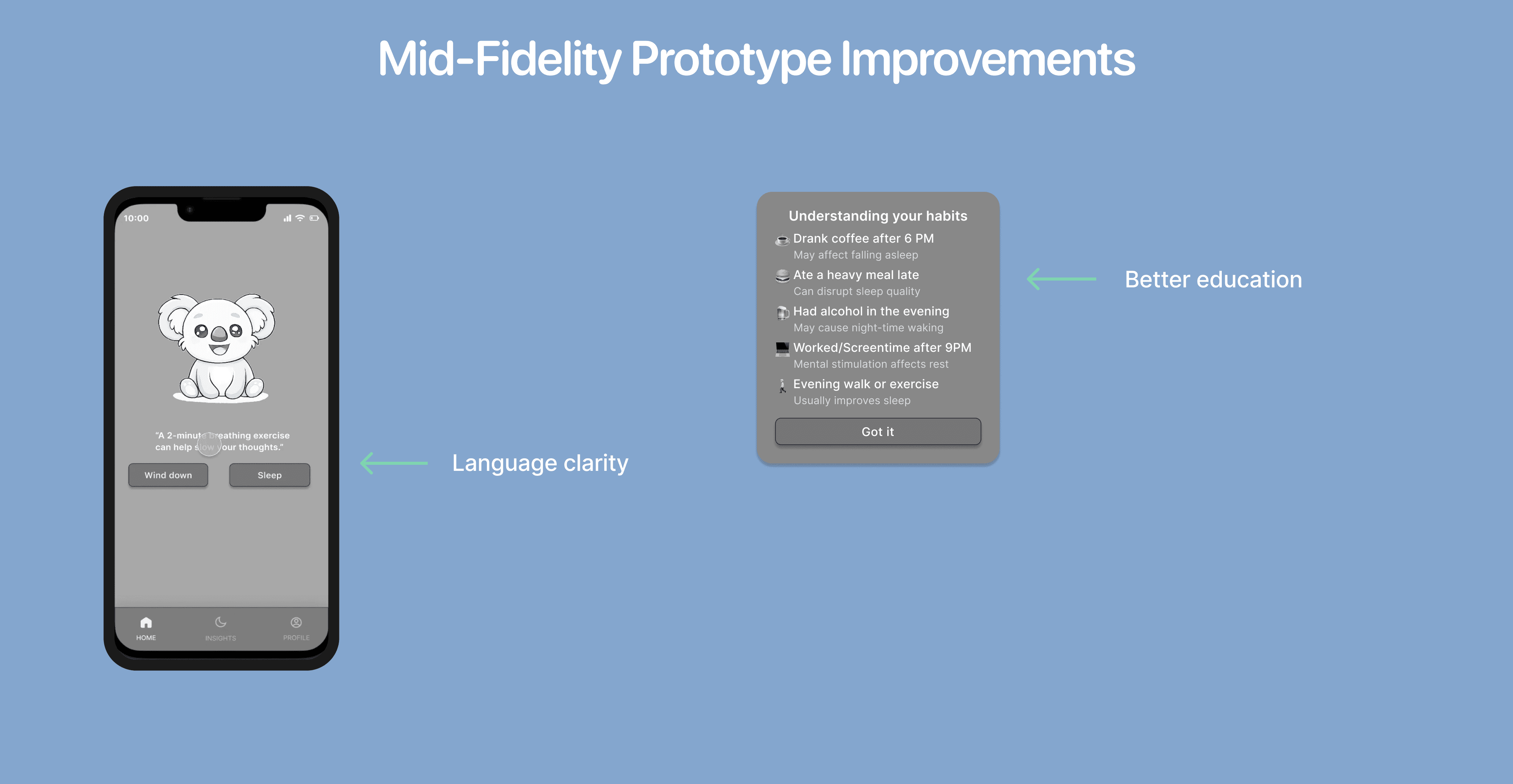
After testing with five users, we refined the language, smoothed transitions, added educational elements, and improved navigation. Users loved Noah and the calming aesthetic — we made the journey clearer and more intuitive.
Visual Design
Visual Competitive Analysis
We analyzed key competitors such as Better Sleep, Sleep Score, Sleep Cycle, and Calm. The market splits between clinical and mystical styles, leaving space for a warm, human bedtime companion. Positioned Sleepy Pal between clinical and mystical styles.

Brand Attributes & Mood board
Sleepy Pal is built around five attributes: calming, gentle, reassuring, human, and simple. The moodboard focused on soft moonlight, cozy textures, and warm intimacy.

Visual System & Style Tile
Soft blues create calm, gentle greens add positivity, and warm peach accents add comfort. Rounded, readable typography supports Noah’s friendly voice. Every visual decision was made to make sleep feel emotionally safe.

Why a Koala?
Koalas sleep up to 20 hours a day and symbolize rest. The koala acts as a non-judgmental emotional companion, replacing performance metrics with reassurance.
Final Design
High-Fidelity Prototype
The first high-fidelity screen is a calm, welcoming splash screen. From there, users move through a supportive experience centered around Noah.

Watch the flow in action.
Screen States & Sleep Tracking
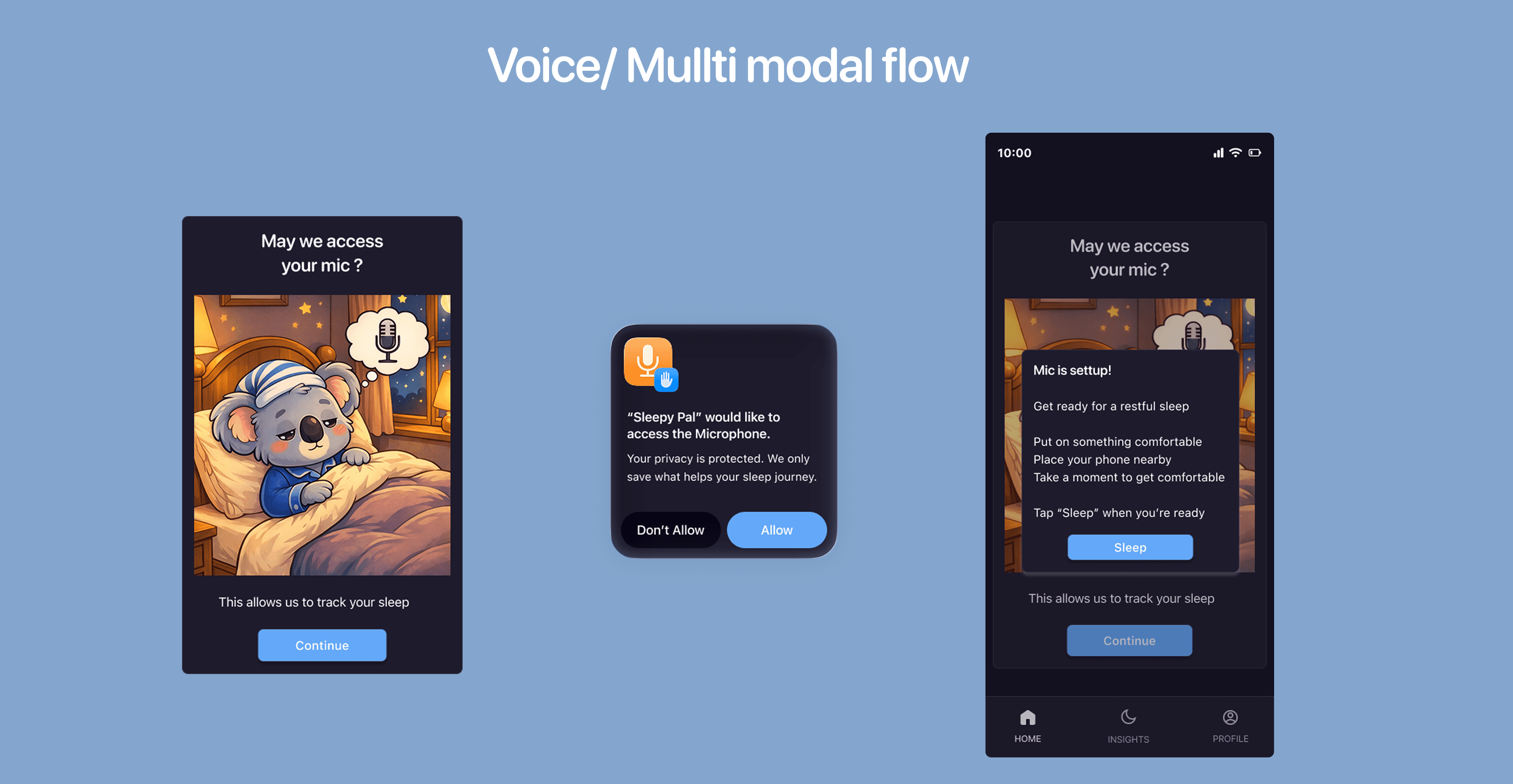
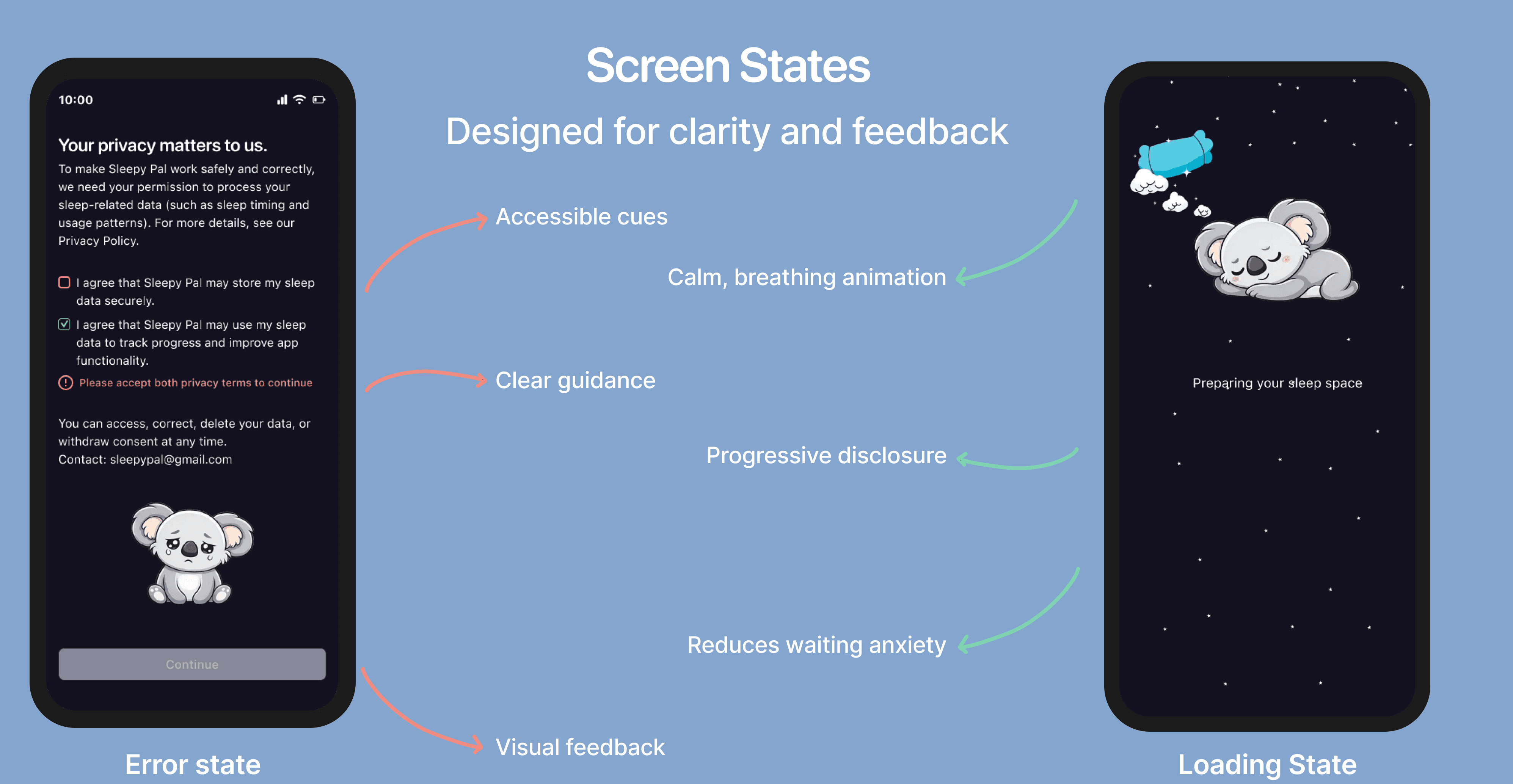
Error and loading states are gentle and reassuring. Sleep tracking uses clear permission prompts and minimal interaction, guiding users to start tracking and step away.
Voice / Multimodal Flow
This flow shows how Sleep Pal records sleep using voice with minimal interaction.
Clear, reassuring permission prompts explain why access is needed, while gentle guidance helps users start sleep tracking and step away from their phone.